I
IGYBuddy

First responders & public safety

Private check-ins and buddy support for people who carry pressure for others

First responders are one of IGYBuddy’s six major launch communities. The responder use case focuses on early support, fatigue, recovery, cumulative pressure, peer connection, practical wellness steps, and trusted signposting.
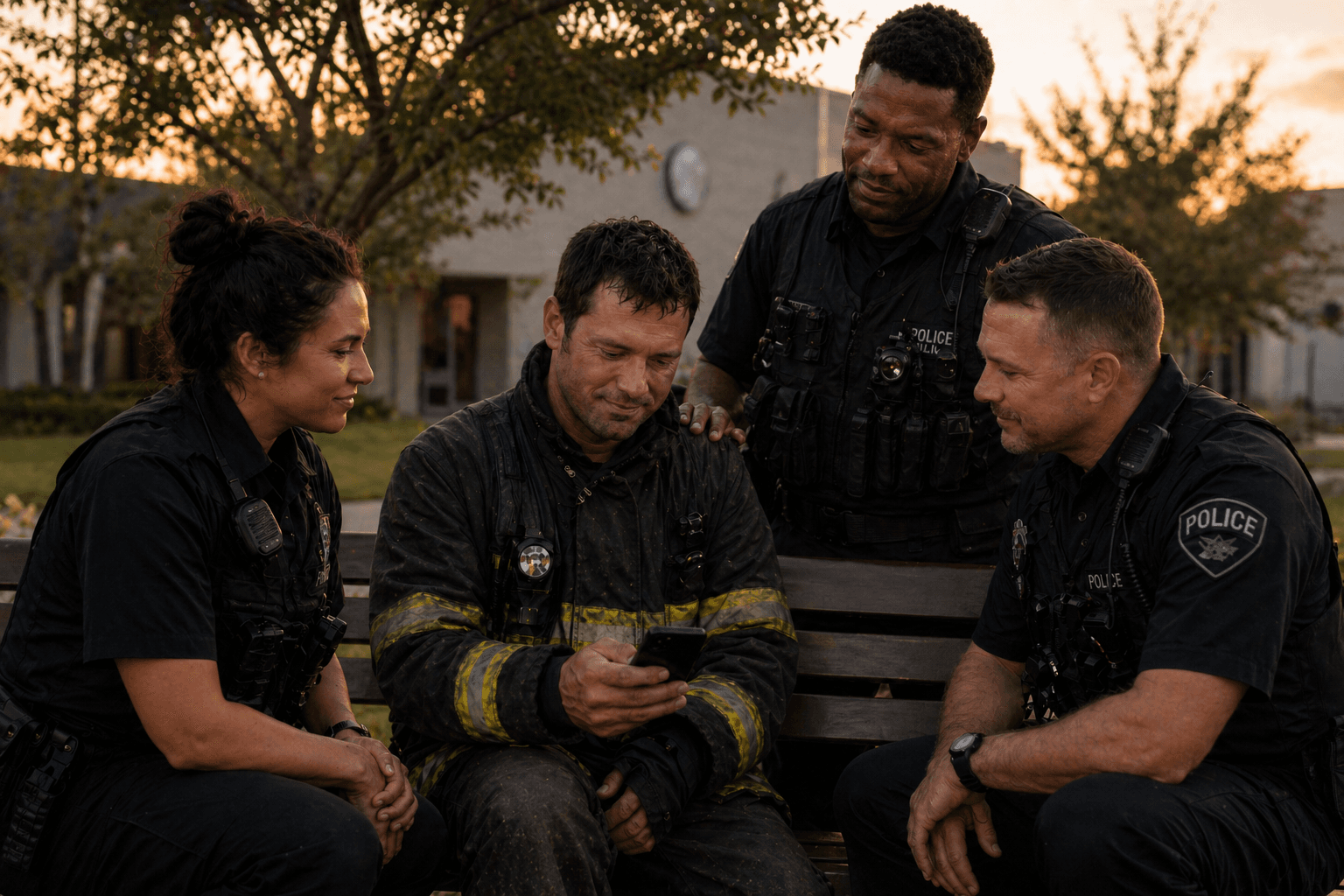
First responders sitting together in a calm supportive moment while one checks a phone.

For responders

A calm way to check in without making support feel formal

  • check in privately before, after, or between demanding shifts
  • notice patterns around pressure, fatigue, sleep, energy, recovery, and isolation
  • choose a trusted buddy, peer supporter, colleague, family member, or friend
  • use practical next steps and guided self-care that fit public-safety work and real-world time pressure
  • keep peer-support, occupational-health, emergency, and crisis resources close

For services and peer-support teams

Add a private early-support layer without replacing peer support

  • complement existing peer-support, chaplaincy, EAP, occupational-health, and wellbeing programs
  • support responders without creating an individual monitoring dashboard
  • offer opt-in buddy connection for formal and informal support networks
  • map local support resources so help is easier to find during difficult moments
  • use anonymized aggregate engagement and feedback to improve support pathways

Pilot shape

Responder pilots should be relationship-led, opt-in, and privacy-first

The best entry route is a small trusted pilot with clear consent, clear crisis boundaries, visible alignment with existing peer-support and occupational-health pathways, and practical self-care features that fit shift reality.

Start with trusted teams

Run a focused pilot with a dispatch/control-room group, volunteer or retained fire team, EMS cohort, police peer-support group, corrections team, or public-safety family network.

Partner with peer-support leads

IGYBuddy should sit beside trained peer supporters and occupational-health routes. The aim is earlier connection, practical self-care, and easier signposting, not replacement of existing responder programs.

Protect trust first

Responders need confidence that the app is not surveillance. Keep individual data user-led, provide clear crisis boundaries, and report only aggregate pilot learning to sponsors.

Positioning

IGYBuddy helps responders notice drift earlier, try a realistic reset, and reach trusted support before crisis.

It is designed as a health and wellness support platform to complement, not replace, peer-support programs, occupational health, counselling, crisis lines, or emergency response.